By clicking “Accept All Cookies”, you agree to the storing of cookies on your device to enhance site navigation, analyze site usage, and assist in our marketing efforts. View our Privacy Policy for more information.
Cookies & Privacy
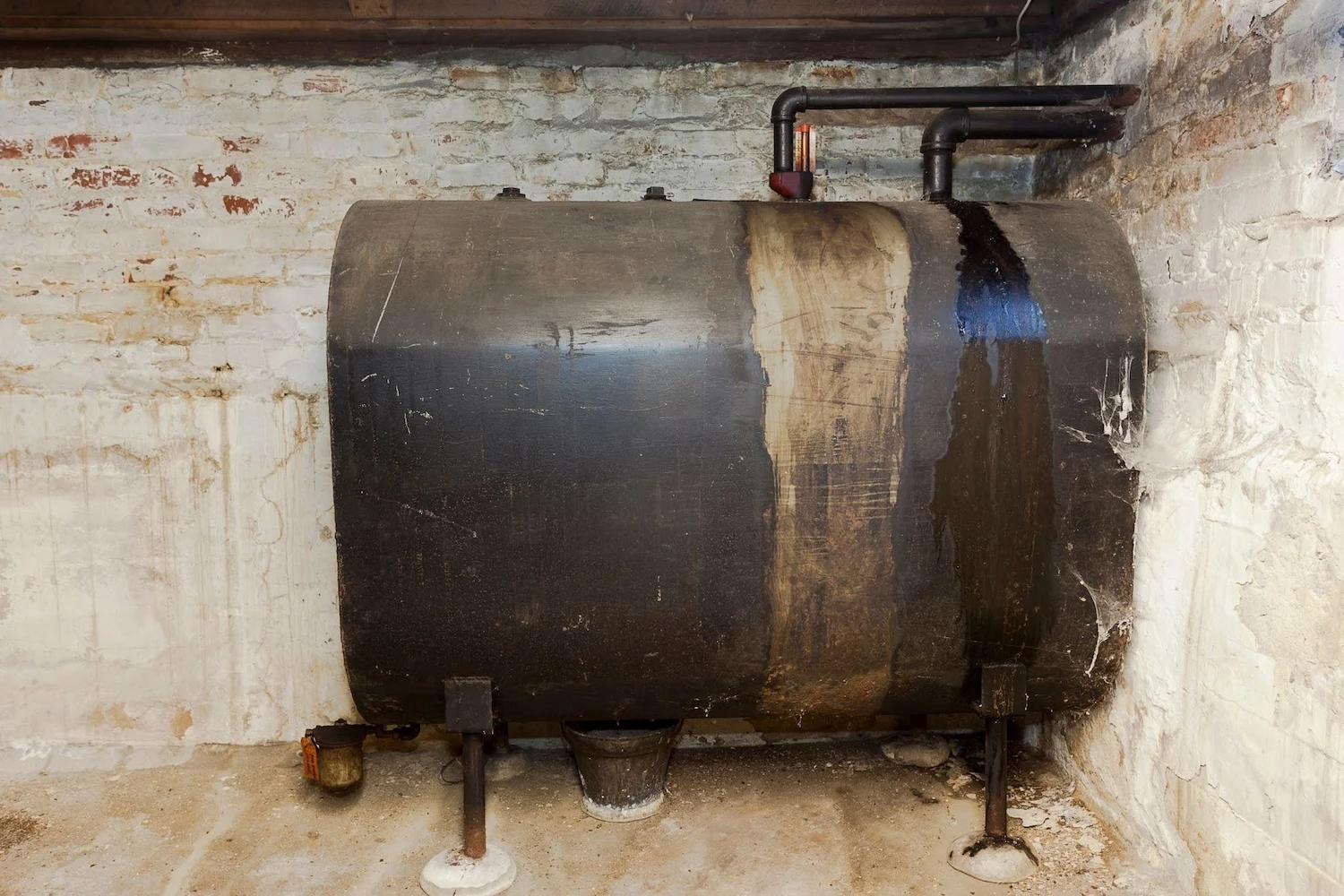
Oil heat remains common in many Massachusetts homes, particularly in older properties. While an oil-fired heating system itself isn't necessarily a concern, the condition, age, and location of the oil storage tank deserve careful attention.
A deteriorating tank or fuel line can leak, potentially contaminating the home, surrounding soil, groundwater, and even neighboring properties. Massachusetts homeowners can also face significant cleanup responsibilities when a release occurs.
Whether you already own a home with oil heat or are considering purchasing one, understanding the oil tank should be part of evaluating the property.
There isn't one expiration date that applies to every oil tank.
Tank material, installation, environment, maintenance, moisture exposure, and other conditions can all affect its useful life. However, age becomes increasingly important as a tank gets older.
MassDEP guidance notes that indoor above-ground tanks generally do not last more than about 30 years, and their actual lifespan can be considerably shorter.
That's particularly important because heating oil tanks can corrode internally. A tank that looks acceptable from the outside isn't necessarily in equally good condition inside.
If you're buying a Massachusetts home with oil heat, one of your first questions should be simple:
How old is the tank?
Look for installation records, labels, receipts, service documentation, or information from the current oil provider. If the age cannot be determined, that uncertainty itself is useful information when evaluating the property.
Oil tank problems aren't always obvious, but there are several conditions homeowners and buyers should pay attention to.
Visible concerns can include:
The bottom of an above-ground storage tank, or AST, deserves particular attention because corrosion and deterioration may develop there. A tank that has been patched, welded, dented, or otherwise modified should also raise questions about its condition and whether replacement is appropriate.
A strong or persistent oil odor is another important warning sign. An excessive smell of heating oil can indicate leakage and should be investigated. An AST that has been leaking excessively or for an extended period can create environmental concerns similar to those associated with an underground tank.
It's also important to evaluate more than the tank itself. The fill pipe, vent, valves, fittings, and fuel supply line are all part of the heating oil system and can potentially become sources of leaks.
Water exposure can contribute to corrosion and deterioration. Exterior fill and vent piping should therefore be considered as part of the overall system. For example, piping positioned too close to the ground may be more susceptible to water, snow, and moisture exposure.
Where the tank is located can make a major difference in how easily problems can be identified.
Above-ground storage tanks are commonly found in Massachusetts basements, garages, or outside the home.
One advantage is visibility. An inspector, homeowner, or heating professional can visually examine accessible portions of the tank and surrounding area for signs of deterioration or leakage.
That doesn't mean an above-ground tank can't cause serious problems. Massachusetts has documented incidents where leaks from above-ground residential tanks resulted in environmental contamination.
An older tank showing corrosion or other signs of deterioration should be evaluated carefully.
Underground tanks deserve additional consideration because much of the system cannot be visually inspected.
MassDEP specifically warns that many underground residential heating oil tanks were essentially bare steel tanks that were not designed to remain buried indefinitely. As these tanks age, corrosion can eventually lead to leakage.
The difficult part is that a leak underground may remain unnoticed.
Heating oil can migrate through surrounding soil and potentially affect groundwater or neighboring properties. What initially appears to be an issue involving an old tank can therefore become a much larger environmental concern.
For buyers, discovering evidence of a current or former underground oil tank should prompt additional questions and potentially specialized investigation.
An underground storage tank, or UST, may not always be obvious during a home showing. In fact, MKC inspectors have encountered underground tanks that the current homeowners did not know existed, even after living in the property for many years.
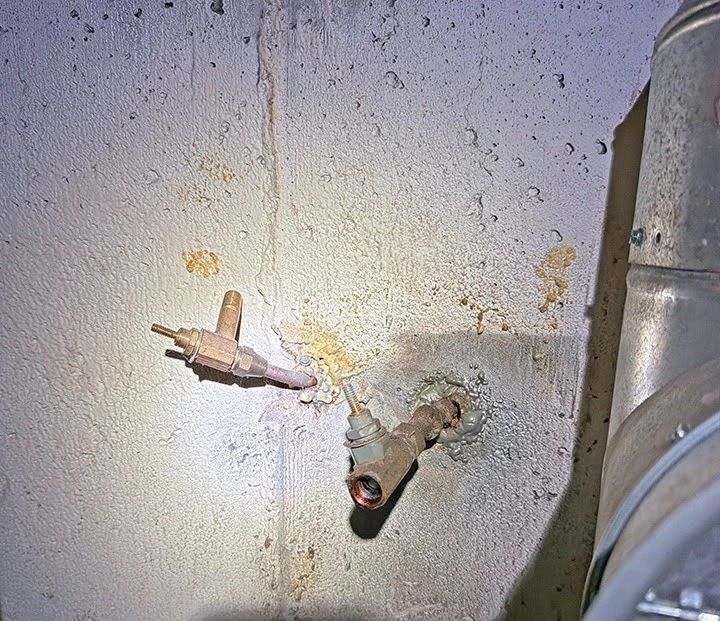
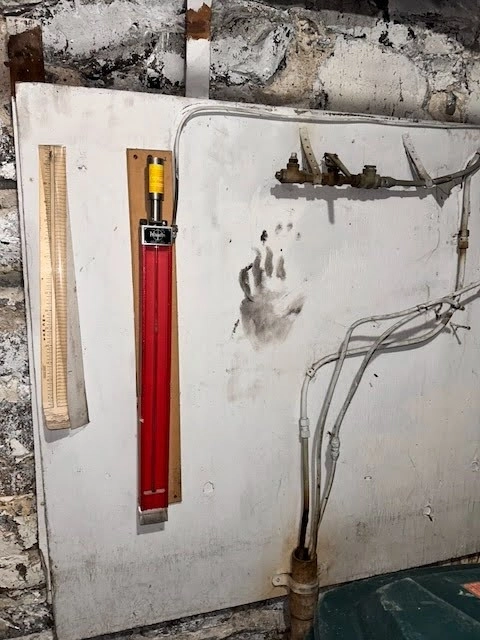
One potential clue is the presence of old oil feed lines entering through the home's foundation wall. These lines may indicate that an underground tank currently exists or that one served the property in the past.
This is one reason an experienced home inspector can be an important first line of defense when purchasing an older Massachusetts home. If there are signs that an underground tank may be or may have been present, ask your inspector what they are seeing and whether additional investigation is appropriate.
The presence of old piping doesn't necessarily confirm that a tank remains underground. It does, however, give buyers a reason to investigate the property's history rather than simply assuming a tank was never present.
Finding out that a property once had an underground oil tank isn't necessarily the end of the conversation.
The important question is what happened when it was removed.
Buyers should ask whether documentation exists showing:
Your local fire department can be an important resource when researching the history of an underground tank. Buyers can contact the local fire department to ask whether records exist relating to a tank installation, removal, or other work performed at the property.
For underground tank removals dating back to 1993 or later, Massachusetts Department of Environmental Protection records may also be relevant when researching the history of the property and whether environmental cleanup was required.
Documentation becomes particularly valuable because once a tank is gone and the area has been restored, there may be little visible evidence of its previous condition.
If records are incomplete or there are questions about a former underground tank, buyers should discuss appropriate next steps with their home inspector, attorney, environmental professional, or other qualified specialist.
If your home inspector identifies piping, equipment, or other conditions that suggest a current or former underground oil tank may be present, don't assume that the tank is still there or that it has leaked. Instead, use the finding as a starting point for additional investigation.
Begin by asking the seller for any records related to previous oil heating systems or tank removals. You can also contact the local fire department to determine whether records of a tank or previous removal are available.
If the property's history remains unclear, a qualified tank or environmental company can help locate a suspected underground tank. Specialized companies may also be able to perform preliminary soil testing when there is concern about possible leakage from either an underground or above-ground tank.
If a tank is discovered, additional evaluation can help determine its condition, whether leakage has occurred, and what steps may be appropriate before moving forward with the purchase.
The key is to gather the information necessary to understand exactly what is present and whether it creates a concern for the property.
Sometimes the tank gets all the attention when another component presents the problem.
The supply line carries heating oil from the storage tank to the heating equipment. In older Massachusetts homes, these lines may pass through or beneath concrete floors or other areas where they aren't easily visible.
MassDEP has specifically warned about older delivery lines coming into contact with soil, concrete, and moisture. Over time, corrosion or physical damage can cause leakage.
A small leak in a concealed line may continue without being immediately noticed.
Homeowners should understand how the oil travels from the tank to the heating equipment and whether the line is visible and properly protected.
An oil leak is different from many ordinary home repairs.
Replacing a failing appliance or repairing a section of plumbing generally addresses the physical problem itself. An oil release can also create an environmental cleanup issue.
MassDEP notes that leaking heating oil can move through soil and groundwater, affect neighboring properties, contaminate indoor air, and threaten drinking water.
Massachusetts law establishes requirements surrounding releases of oil and hazardous materials and their cleanup.
That makes identifying potential oil tank problems early particularly important.
Homeowners should not automatically assume their standard insurance policy covers a heating oil release.
Massachusetts requires insurers to offer coverage for leaks from home heating oil systems, but the Commonwealth notes that this coverage is not necessarily included automatically in a standard homeowners policy.
There may also be preventative requirements that must be satisfied to qualify for coverage, such as certain protections involving the oil supply line or safety equipment.
Homeowners with oil heat should speak directly with their insurance provider about their specific policy, eligibility requirements, coverage limits, and exclusions.
For buyers, this is a useful conversation to have before taking ownership of a home with an oil heating system.
If you're considering a home with an oil tank, gather as much history as possible.
Ask the seller:
The answers can help determine whether additional evaluation is warranted before purchasing the home.
A home inspector isn't an oil tank specialist, and Massachusetts home inspection regulations do not specifically require inspectors to inspect oil storage tanks as part of the standard home inspection.
That doesn't mean you shouldn't ask your inspector about them.
Experienced Massachusetts home inspectors spend a great deal of time in older homes and are accustomed to seeing oil heating systems, above-ground tanks, and signs that underground tanks may currently or previously have been present. Your home inspector can therefore be an important first line of defense.
If an above-ground storage tank is present, ask your inspector whether they observe visible concerns with its condition, such as corrosion, leakage, staining, improper support, damaged components, previous repairs, or other signs of deterioration.
You should also ask whether they see any evidence of a current or former underground storage tank. Old oil feed lines entering through a foundation wall, for example, may warrant additional investigation.
MKC inspectors have discovered evidence of underground tanks that sellers themselves were unaware of, including at properties where the homeowners had lived for many years.
At the same time, it's important to understand the limits of a standard home inspection. An inspector cannot see through a steel tank, evaluate inaccessible underground components, or determine whether surrounding soil is contaminated through visual inspection alone.
If there is evidence of a buried tank, previous leakage, contamination, or another environmental concern, further evaluation by an appropriately qualified tank or environmental professional may be recommended.
Think of your home inspector as the person who can help identify the warning signs and point you in the right direction. When it comes to oil tanks, noticing that something deserves a closer look can be extremely valuable before purchasing a home.
Plenty of Massachusetts homes are safely and effectively heated with oil.
The presence of an oil tank alone shouldn't necessarily discourage you from purchasing a property. What matters is understanding the tank's age, condition, location, installation, and history.
An older above-ground tank may need to be budgeted for replacement. An underground tank may warrant additional investigation. Evidence of a previous tank should lead to questions about removal and environmental documentation.
These are much easier issues to navigate when you know about them before purchasing the property.
Buying a Massachusetts home with oil heat?
MKC Associates can help you better understand the condition of the home's visible and accessible systems, including potential concerns that may warrant further evaluation.
Schedule your home inspection with MKC Associates.

The MKC Team represents the collective expertise, experience, and dedication of the professionals at MKC Associates Home Inspection. The team operates with a collaborative approach, combining decades of experience in home inspection, construction, engineering, property management, and related fields to provide reliable and informative content for homeowners and buyers.
Contact MKC Associates to schedule your home reinspection and keep the purchase process moving quickly!
Schedule Now